


- Articles
- Hits: 602
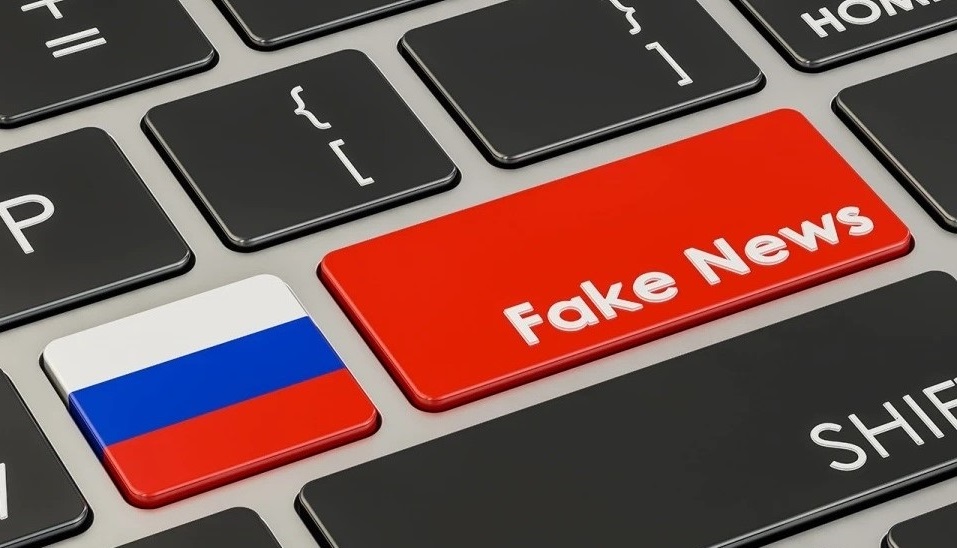
Information and psychological operations (PSYOP) became an integral part of the Russian-Ukrainian war. In the new era, when the Internet and social networks are becoming more and more common, PSYOP are also becoming more and more large-scale. To defeat the enemy in the modern era, only a powerful military-industrial complex, a large army and the latest models of military equipment may not be enough. Undoubtedly, the economic and technological component is a significant, if not the most important, factor in victory in the war, as well as a well-prepared army and human resources. But in the third millennium, it is increasingly difficult to do without the information component, and this applies not only to wars.
Modern history, in particular, the events of the Russian-Ukrainian war, have shown that it is not always possible to achieve success at the front with a superior military force. In individual cases, success may depend on the successful disinformation of the enemy, because we live in the post-truth (or post-truth) period and it is very often difficult to quickly establish whether this or that fact is true.
Even long before the modern information age, during wars, the parties to the conflict sometimes used various methods of disinformation of the enemy. We can ignore the legendary and semi-legendary stories, for which there is not enough reliable evidence, for example, about the Trojan horse or the Scythians, who tricked the Persians into a trap, and start from the Middle Ages, when even then during certain military actions (sieges of cities, raids, battles) used peculiar elements of disinformation. In this context, we can recall the verifiable historical fact of the siege of the Italian city of Luna by the Vikings (which they mistakenly confused with Rome), then the leader of the Vikings Halstein resorted to a kind of disinformation - pretending to be dying, he asked to be let in with his soldiers outside the city walls so that in the last moments of his life to be baptized Bishop Luna believed in the sincerity of the Scandinavian leader. Therefore, when the Vikings found themselves outside the city gate, they immediately resorted to robbery and looting.
We can also recall the false maneuvers of Napoleon Bonaparte during decisive battles, when he often managed to mislead the enemy by simulating an attack that did not actually occur. With the invention of more modern means of communication, such as the telegraph, disinformation in war became many times more common. Thus, during the First World War, the warring parties constantly spread false information through open ciphers about troop movements, offensive plans, etc.
So, as we can see from a brief overview, even before the emergence of electronic media and social networks, information and psychological operations took place in one form or another - from primitive untruths - to well-thought-out operations to disinformation the enemy.
Even before the beginning of the full-scale invasion, the Russian Federation conducted a number of information campaigns against Ukraine, using various informational pretexts. This was done by the usual method of twisting and ripping out of context one or another piece of information, quotes from politicians, socio-political figures, leaders of public opinion, etc. This is being done even now with even greater dynamics. It should be noted that despite the numerous information about the facts of corruption and embezzlement in the Russian army, Moscow really does not spare money and resources for its information campaigns and propaganda media. This is an additional evidence that informational and psychological operations are a really important component of modern wars.
With the beginning of the full-scale invasion of Russia in Ukrainian society, the demand for information increased sharply. Millions of Ukrainians use social networks, various electronic information resources, etc. every day. They make it possible to quickly learn about the latest news, learn about air alert, the movement of UAVs, cruise missiles, etc. Therefore, understanding this, the enemy is especially active among this segment of information resources.
As early as 2022, information was made public that the special services of Ukraine had exposed about 300 channels of the currently popular program (mobile application) for communication - Telegram, which are actively conducting an anti-Ukrainian information campaign. Moreover, their activities are usually not limited to directly anti-Ukrainian narratives, but to the dissemination of posts with known false information, which is aimed at disinformation Ukrainians, sowing panic, despair, division in society, etc. As a rule, these Telegram channels and groups do not have Russian or anti-Ukrainian names at all. They can be called typical names, such as «Ukraine News», but carry misinformation, manipulation and other destructive things.
What do these resources write most often? The most common topics published on these channels are events in and around Ukraine. There, the thesis is methodically and purposefully advanced that the West is tired of the war in Ukraine and is increasingly unwilling to support Kyiv, that the situation is moving towards a gradual freezing of the conflict and Ukraine has forever lost the South and part of Donbas with Crimea, that Ukraine will not be supplied with weapons, it is not capable survive the winter, and Poland and Hungary are just waiting for a favorable moment to annex Western Ukraine, etc. Separately, Russian propaganda draws attention to the careless and ambiguous statements of both Ukrainian and Western politicians and public opinion leaders, distorting the original idea of such statements.
The materials that appear on the mentioned resources are very often supported by comments of non-existent persons. For this purpose, the enemy creates special media resources - the so-called bot farms operated by IT technology specialists and experienced users of social networks. As a rule, they receive tasks with theses, which they have to implement by writing comments and, thus, creating the impression of an active discussion of this or that topic in social networks. This can contribute both to the additional distribution of false information and to the creation of the illusion of its truth.
In addition to the newest means of disinformation and propaganda, the occupiers also use the old ones - spreading, in particular, propaganda materials in the occupied territories, improving the work of print media, television and radio broadcasting, etc. For example, a radio station controlled by the occupiers currently operates in Melitopol, and local television is broadcast on the platform of Melitopol and MTV Plus, also controlled by the occupation authorities, through which they rebroadcast both Russian propaganda shows and local content. From open sources. By 2023, 4 periodicals were published in the occupied territories of Kherson Oblast and Zaporizhzhia - in Melitopol, Berdyansk, Genichesk and other cities, not taking into account the significant amount of propaganda products actively distributed by the occupiers in educational institutions, municipal institutions, etc.
Thus, the occupiers seek to create a certain information vacuum in the territories under their control. The main themes that the occupiers spread among the Ukrainian population are despair in the ability of the Defense Forces of Ukraine to return the occupied territories, the idea that the Ukrainian authorities have given up on the citizens temporarily living in the occupation, that Russia has permanently gained control over these territories, etc. Unfortunately, due to the lack of information, the lack of normal means of communication among people living in the occupied territories, it is not uncommon to see despair in the victory of Ukraine. This, for example, can be clearly traced after the de-occupation of Kharkiv Oblast, the south of Donetsk Oblast, and Kherson with the left bank of Kherson Oblast, when during interviews Ukrainians freed from Russian occupation admitted that panic and despondency were observed among them.
Although in this context it is necessary to mention Telegram channels again, but with pro-Ukrainian content, which can be read by residents of temporarily occupied territories, where, of course, there is Internet coverage. This once again proves that in such conditions, the latest mass media can be more competitive with traditional mass media - television, radio, and print media.
Logically, the question arises: does Ukraine conduct similar informational and psychological operations?
Undoubtedly, the Ukrainian special services, and the Ukrainian side as a whole, conduct various information operations to disinformation the enemy. The methodology of these measures is generally the same as that of the Russians, but it is worth noting that Ukrainian PSYOP are more thought-out and effective. In particular, the most effective Ukrainian special operation in the information field was disinformation of the enemy before the start of the Balaklia-Kupian offensive operation in September-October 2022. Then, with the help of mass media, comments of leading politicians, statesmen, and commanders, notoriously unreliable information was spread that the Defense Forces of Ukraine would launch the first real counteroffensive to liberate Ukrainian territories on Kherson. We can recall how the topic of Kherson watermelons gained particular popularity in the mass media at that time, which was a hint of the attack of Ukrainian troops on Kherson and its quick liberation. As can be seen from the development of subsequent events, this information operation turned out to be extremely successful, since the invaders, believing that the main attack of the Defense Forces of Ukraine would be on Kherson, transferred significant forces there, weakening other areas of the front. Taking into account the peculiarities of logistics and transport connections of Kherson, which is located on the right bank of the Dnieper, and the main grouping of the Russian occupying forces, which was located on the left bank, the Ukrainian forces were able to partially block the occupiers in Kherson by striking the main transport branch - the Antonivsky bridge, which largely paralyzed them forces went on the offensive in Kharkiv Oblast after that. The result of this special operation was the liberation of almost all of Kharkiv Oblast, the north of Donetsk Oblast and minor territories in Luhansk Oblast. Military analysts call the Balakliya-Kupyansk offensive operation of the Defense Forces of Ukraine the most vivid and successful since the Second World War, in the success of which the enemy's disinformation played a key role.
Thus, it can be concluded that the modern era has made a lot of corrections in the concept and course of wars. Undoubtedly, an important component of modern wars is the technological component, new types of weapons - expensive armored vehicles, aviation, fleet are replaced by unmanned aerial vehicles, underwater drones, other robotic equipment with artificial intelligence, radio electronic warfare, etc. This is already changing the tactics and strategy of warfare. But at the same time, in parallel with the development of information technologies, the already mentioned artificial intelligence, information and psychological operations are gaining more and more influence on the course of the war, which, in combination with well-planned actions at the front, can be the key to victory in the conditions of new generation wars.
Valentyn Haidai - director of the Intermarium Institute