


- Articles
- Hits: 536
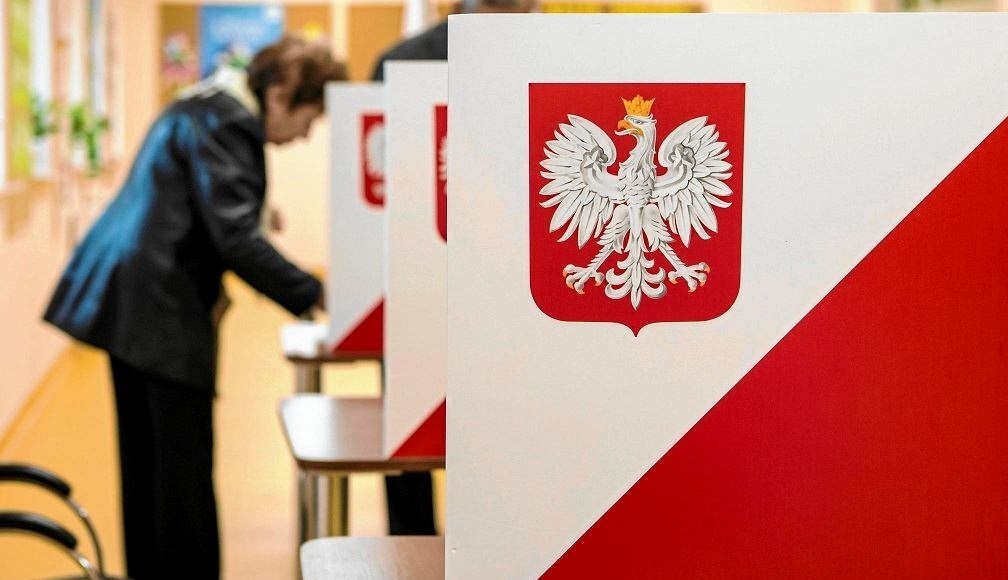
On 15 October, parliamentary elections were held in Poland. Although 5 political forces entered the legislative body, the most intense election campaign was between two parties - Law and Justice and Civic Platform. At the finish line, these parties received approximately equal numbers of votes, and, accordingly, approximately the same number of seats in the parliament - Law and Justice received over 35% of the vote and 194 seats in the Sejm, the Civic Platform, which united with a number of other forces in the Civic Coalition, received over 30% of the vote, or 157 seats in the lower house of the Polish parliament.
Consequently, none of the two favourites in the race gained a majority. Therefore, the most pressing issue in the coming days will be the formation of a coalition and government. Of course, such parliamentary and governmental battles create a public and political discourse and a number of questions, first of all, what will Poland's policy towards the EU, Ukraine, and its support be now? Given the recent events in Slovakia and the Hungarian authorities' rendezvous with Putin and Lukashenko, will Poland have its own Orban? Therefore, let us analyse the main trends of the recent parliamentary elections in Poland and try to model Warsaw's policy in the next six months to a year.
Coalition options
It is obvious that the future parliamentary (as well as governmental) coalition will be based around the Law and Justice party or the Civic Platform. But, as we noted above, none of these political parties has enough votes to form a majority on its own, and therefore a government. Therefore, there will definitely be a coalition. What are the most likely options for coalitions in the Sejm?
1) A liberal coalition led by the Civic Platform and its allies in the electoral bloc. This alliance may be joined by the Third Way and New Left parties, which came third and fourth in the election race and preliminarily have 65 and 25 seats respectively in the lower house. This option is the most realistic, as these forces are the most similar in terms of their fundamental programmes and ideology. These are pro-European forces of a centrist and centre-left orientation, with a liberal ideology. Brussels has relied on them because, of course, they are the most loyal to the central European authorities and defend the unity of the European Union; they cannot be called Eurosceptics, except for the left, among whom there is moderate and balanced Euroscepticism.
2) Conservative coalition. In this case, we are talking about the blocking of Law and Justice with the centre-right Confederation. These are related political forces in terms of their ideology and policy vectors. Both forces are based on traditional principles, profess conservative values, and are backed by the Catholic Church. In addition, they are quite critical of the EU central government. In fact, over the last 7-8 years of the centre-right's rule, they have repeatedly criticised Brussels over certain initiatives, such as the reform of the Polish Constitutional Court, a complete ban on abortion, refusal to accept refugees from Africa and Asia, etc. This policy of the governments formed by the Law and Justice party even led to sanctions against Poland by the European Union.
But such a hypothetical coalition has a very real disadvantage - even with this option, Law and Justice and the Confederation would not have enough votes. In total, they can currently count on 212 mandates, while a majority requires at least 231 mandates.
Can another political force join this coalition? Theoretically, yes, but given the too great contrast in ideologies and fundamental programmes of the other parties, in particular the Third Way and especially the Left, this form of coalition - the right with the left and the left-centre - looks illusory at the moment.
3) Broad coalition. A broad coalition, for example, of the giant parties Law and Justice and Civic Platform (or Civic Coalition), also has a theoretical chance of existence. The likelihood of its creation would increase if Poland were to experience significant socio-political upheavals or fateful challenges, such as war, an acute economic crisis, the EU crisis, etc. None of these options are realistic today, and therefore a broad coalition is also unlikely. This is compounded by the ambitions and contradictions of the leaders of Law and Justice, J. Kaczynski and M. Morawiecki, and the Civic Platform, D. Tusk.
4) «Hung parliament». This is not a format of an alternative coalition, but rather its absence. The term «hung parliament» is sometimes used to describe the distribution of political forces in a particular legislative body of a particular state. If the parliament is «hung», it means that none of the political forces present there has enough mandates to form a majority, or the majority is so shaky that it is based on the advantage of 1-2 mandates. Thus, this option is also possible if other political forces do not join the election favourites.
In this context, it is worth noting that both Law and Justice and the Civic Platform have already submitted their candidacies for the post of Prime Minister to President Duda - M. Morawiecki and D. Tusk, respectively. This shows that both political forces are confident in the prospect of forming their own coalition. Obviously, negotiations on the blockade with third parties are ongoing and will continue for at least another week.
What should Brussels, London, Washington and Kyiv expect?
Of course, the question arises as to what will happen to Warsaw's foreign policy orientations if a particular version of the coalition is formed in Poland.
The European Union.
With the formation of a coalition on the basis of the Civic Platform and, especially, the election of D. Tusk as Prime Minister of Poland, relations between Warsaw and Brussels, as well as other important EU centres such as Berlin and Paris, will certainly improve. The Civic Platform has never concealed its pro-Europeanism, commitment to the ideas of the EU, its cohesion, etc.
At a time of current crisis trends in the European Union, the coming to power of European-oriented politicians in Poland could be a kind of lifeline for the old Europe, especially since Poland is an important EU member and a key country in the Central European region. It's no secret that during the time of conservative governments, relations between Brussels and Warsaw were not ideal. They were deteriorating due to the aforementioned initiatives of the Polish authorities to reform the Polish Constitutional Court, to ban abortion, and due to other egregious initiatives of the Polish authorities, such as constant accusations against Germany regarding the compensation for damage caused to Poland during the Second World War.
In addition, in the context of the rise to power in Slovakia of Eurosceptics led by R. Fico, strengthening pro-European forces among the Visegrad Four countries (Poland, Czech Republic, Slovakia, and Hungary) is extremely important for the EU authorities. Moreover, unlike the Polish conservatives, it will be more difficult for both Fico and Orban to find common ground, let alone the support of Polish liberals.
If a conservative government is formed, the current state of affairs in Poland's dialogue with the EU central government, as well as in its dialogue with the UK, the US and Ukraine, will generally remain the same. No surprises here, as they say.
The UK.
Given that conservative forces have been in power in the UK and Poland, relations between London and Warsaw have been quite warm in recent years. This was reflected in the foreign policy of these countries and in the comprehensive cooperation between them - economic, political, and military. It would be incorrect to talk about a new political belt from Britain to Eastern Europe, but it was in the dialogue between the conservative governments of Britain and Poland that the issues of certain forms and concepts of alternative interstate associations to the European Union, including those involving Ukraine, were raised. Thus, if Law and Justice remains in power, these consultations may continue.
At the same time, it cannot be said categorically that initiatives to deepen British-Polish cooperation, as well as the search for alternative intergovernmental platforms, will be curtailed after the liberal coalition comes to power. The fact is that Poland has been trying on the role of a regional leader for quite some time, so it is constantly testing various forms of interstate associations, such as the Visegrad Four, the Lublin Triangle, the Three Seas Initiative, etc., and London is to some extent a counterweight to the centres of continental Europe - Berlin, Paris, and Brussels.
USA.
The Democrats are ideologically closer to the Civic Platform than to the conservative Law and Justice. Accordingly, the Liberals' coming to power could give a new impetus to US-Polish relations. Although, as in the case of the UK, the dialogue between the two countries has become much closer in recent years, which is reflected in trade, political cooperation, visa abolition, the US military presence in Poland and assistance in rearming the Polish army, among other factors.
Ukraine.
Any combination of the coalition in the Sejm will not be a «pig in a poke» for Ukraine. In general, this is as predictable as in the case of the UK and the US. Poland and Ukraine are strategic partners, and despite persistent misunderstandings and disagreements, for example, in the humanitarian or economic sphere, the two countries enjoy dynamic and comprehensive cooperation. This is because neither a right-wing nor a liberal government will be a challenge for Kyiv. Tusk has been known for his pro-Ukrainian stance since 2014 and then when he was president of the European Council.
With regard to the recent trade misunderstandings between Ukraine and Poland regarding the export of Ukrainian grain and other agricultural products, it would be naive to expect a quick understanding with the liberal government of Poland, as both Morawiecki and Tusk will defend the interests of Polish entrepreneurs and farmers. But in general, due to the Civic Platform's commitment to the EU, there is a high probability of reaching a consensus on the export of Ukrainian grain and ending the trade wars between the two countries.
In addition, the Civic Platform is not as active in revising history as some radical circles from the Law and Justice and the right-wing Confederation, so we can expect an understanding between Kyiv and Warsaw on this issue.
But once again, it is worth emphasising that the relations between Poland and Ukraine are so strong and strategic that any of the realistic options for a coalition will continue this close dialogue. Moreover, the strategic level of these relations is determined not only by the volume of trade, humanitarian cooperation, and Poland's solidarity with Ukrainian refugees. The most important thing in this context is the civilisational and security challenges faced by both countries in connection with Russian aggression.
Thus, Poland is entering a new political era. This is happening at a difficult time for Poland itself and the region due to internal contradictions in the European Union and external challenges, such as Russian aggression against Ukraine, threats of provocations from Belarus, etc. Obviously, the change of government from conservative to liberal will bring certain adjustments not only to Warsaw's relations with its neighbours and the EU central government, but also changes in humanitarian policy or socio-economic life, and in the relations between the church and state. Therefore, given the above, especially the epochal nature of the times we are living through, the future government may become, without exaggeration, historic and fateful.
Valentyn Haidai - director of the Intermarium Institute