


- News
- Hits: 513
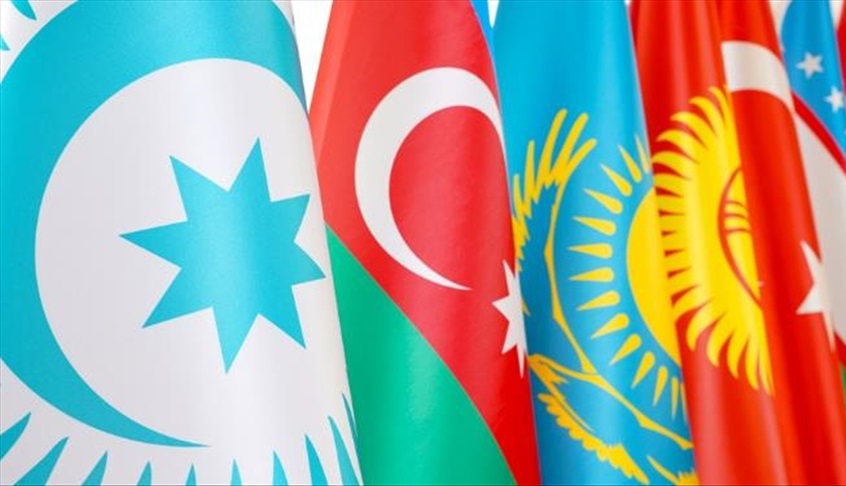
On June 24, 2023, the Intermarium Institute held an online conference on the topic: «Ukraine and the Turks world: security, politics and economy». Experts from Ukraine, Turkey and Azerbaijan took part in the conference.
The experts discussed Ukraine's interstate contacts with the Turks countries, particularly in the sphere of security and defense, economy, and trade. Special attention was also paid to political dialogue.
The conference was attended by: Aqil Rustamzade - Azerbaijani military analyst, expert in the field of security and defense, Deniz Berktay - Turkish journalist, expert of Eastern Europe, Serhii Shabovta - Ukrainian expert on security issues, Artur Bilous - former deputy of the Verkhovna Rada, expert of the Intermarium Institute - Volodymyr Volia, and director of the Intermarium Institute - Valentyn Haidai.
In the first block on the topic of security and military-technical cooperation, the following spoke: Aqil Rustamzade, Deniz Berktay and Serhii Shabovta.
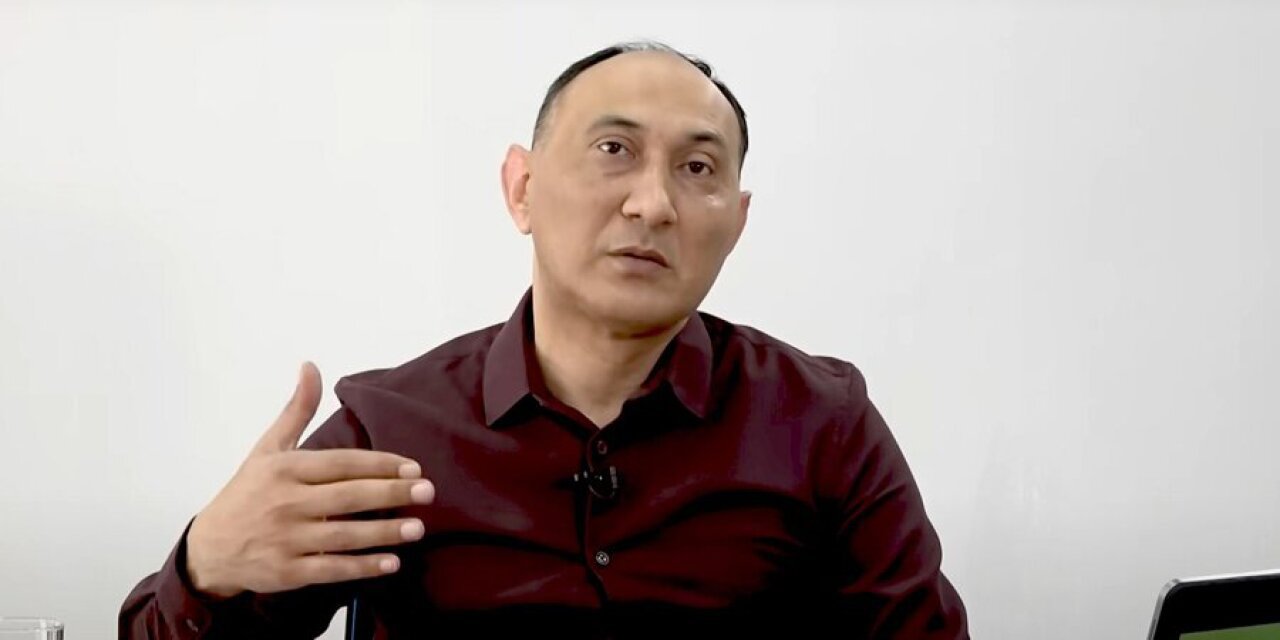 Aqil Rustamzade spoke about the system of collective security in the Black Sea region. In particular, he noted:
«Today there is no clear understanding of how the Russian-Ukrainian war will end. It is possible to predict two main scenarios in which this war may end and to indicate the prospects for these two scenarios. The first is undesirable, it is the path of Minsk-3, that is, at some stage the war will stop, it will move into the political plane, the plane of political settlement.
Let's consider the security architecture of the countries of the Black Sea region in this perspective. Regardless of the consequences of the Russian-Ukrainian war, a Turkish-Azerbaijani tandem has formed in the Caucasus, in which Georgia is also looking for its place. The scenario of the transition of the war to the political plane will also affect the integrity of the Turks world and the regional security system of the countries of Central Asia. Kazakhstan, Uzbekistan, Kyrgyzstan, Turkmenistan are countries with traditional Russian influence, with a traditional pro-Russian political elite. Of these countries, Kazakhstan is most actively trying to get on the path of its national self-awareness.
Undoubtedly, a block will be formed in the South Caucasus - it is Turkey, Georgia and Azerbaijan. With the change of the political paradigm in Georgia, this block will be able to help Ukraine both in the humanitarian sphere and in the sphere of security and defense and will strengthen security in the Black Sea basin. However, all this will depend not only on the consequences of the war, but also on whether Ukraine will become a member of the EU and NATO. If you join these associations, you will be in the European paradigm, which is negative both for Turkey and for the entire Muslim world. This will to some extent inhibit our contacts, our partnership, cooperation in the field of security.
But if, after the war, Ukraine will create a Bloc with countries such as Poland and the Baltic states, this is a «new Europe» and Turkey and Azerbaijan have never had misunderstandings with these countries. Therefore, if we talk about the conditional Commonwealth of Nations, the South Caucasus and the Black Sea basin, then in this case these unions may have good prospects not only in terms of cooperation in the field of security, but also, for example, in the economy.
Let's move on to the second scenario of ending the war in Ukraine.
Ukraine wins this war and the Yugoslav scenario begins in Russia, when some subjects will leave the Russian Federation. In this case, a full-fledged Turks world will be formed, which will build its own security system. And, obviously, there will be agreements with Ukraine on security guarantees regarding the remnants of the Russian Federation. Because its territory, with or without remnants of statehood, must be under control. And in this case, our cooperation becomes more real not only in the field of security. The collapse of such a state as Russia will also lead to an increase in trade between our countries.
After the formation of the Turks world, its cooperation with Ukraine and the conditional Polish-Lithuanian Commonwealth is quite real. These countries - Ukraine, Poland, Turkey, Azerbaijan - have their own military industry. Modern weapons are very expensive and it is better to make them in cooperation. A very good vector, in my opinion, is the activity of the Turkish company «Baykar Makina» in Ukraine. Also, Azerbaijan provided Ukraine with about 10 million dollars. assistance, in particular, we do not rule out the possibility of sharing anti-mine technologies with Ukraine - these are ground drones, these are aerial drones, etc. Azerbaijan has collected and accumulated a number of developments in anti-mine weapons, and this is relevant for Ukraine.
The only thing that can hinder Ukraine's cooperation with Turkey, Azerbaijan, Kazakhstan and other countries of the region is its accession to the European Union, because the EU sees the Turkic world as its competitor. But there is, conditionally, «new» and «old» Europe. New is a conditional Commonwealth of Nations (Poland, the Baltic States). Therefore, if Ukraine builds closer relations with this part of Europe, relations with the Turkic world will also be closer».
Regarding military cooperation with individual Turkic countries:
«After the war, Ukraine will be in the sphere of interests of the USA, it will have weapons from the USA, thus, Ukraine will have limited opportunities to purchase weapons from other countries, including, this also applies to Azerbaijan. It is unlikely that we and Ukraine will be able to cooperate in large defense projects, although our cooperation in this sector has already begun. The Turkish defense industry already cooperates with the Ukrainian defense industry, and this cooperation will deepen, in particular, in the naval direction and in the production of drones.
I repeat, after the war, Ukraine will have a large amount of Western weapons - European and American, but ties and cooperation between Ukraine and Turkey, Ukraine and Azerbaijan in the military sphere will continue. For example, in Ukraine there is development of hypersonic weapons, development of ballistic missiles (Hrim-2), this is a promising weapon, development of which should be continued».
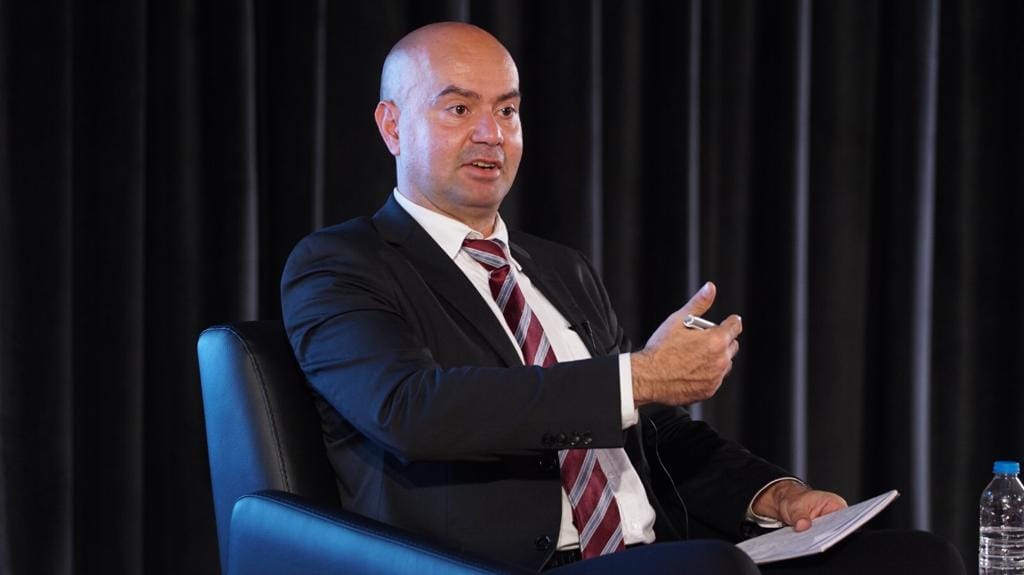 Deniz Berktay is a Turkish journalist, expert of Eastern Europe:
«Ukraine will certainly develop comprehensive relations with the countries of the Turkic world, but it is not realistic to count on allied relations with the Turks world, if only because there is no such unified union as the Turkic world. There is no such military bloc, no such economic bloc, etc. And these countries, which are included in the concept of the Turks world, have different priorities. Indeed, Turkey is a leading country among the mentioned countries, but it does not have the economic, political and military strength to be considered a regional leader.
Before talking about the Turks world, it would be useful to compare it with the conventional Slavic world. The Slavic world is not homogeneous. Some Slavic countries are Catholic, some are Orthodox. There are still Bosnians who practice Islam. In addition, as we know, there were wars and conflicts in the history of many Slavic peoples. There was a conflict in the Balkans and even now there is still enmity between, for example, Croats and Serbs or Serbs and Bosniaks. About 450 years ago, Ukraine had a conflict with Poland. And the most striking example is the current war between Russia and Ukraine. The same cannot be said about the Turks world, it is more uniform and there have been no such confrontations between its peoples, at least in the last 500 years. But this does not give a reason to say that everything is unambiguous between the countries of the Turks world. For example, when we talk about the Slavic world, in the 19th century Russia wanted to be a leader among the Slavic countries and advocated the idea of Pan-Slavism. The same cannot be said about Turkey. In addition, the Ottoman Empire generally looked to the West, while Central Asia gravitated more to the East. Between the Ottoman Turks and the Turkic peoples of Central Asia was Iran, the Caspian Sea, and then these territories were captured by Russia. At that time, the peoples of Central Asia did not yet have national self-awareness, and therefore Russia was able to enslave them relatively easily.
It can also be noted that among the Turks countries there is one unrecognized one - this is the Turkish Republic of Northern Cyprus, and its independence has not been recognized by any other country of the Turkic world. Many countries of the Turks world still maintain normal relations with Russia, Central Asia balances between China and Russia. All this suggests that the Turkic world is heterogeneous and the process of rapprochement between individual countries will take a significant amount of time».
Regarding the possible disintegration of Russia and, as a result, the convergence of the countries of the Turks world, Deniz Berktay noted the following:
«The collapse of Russia may increase the chances of creating a full-fledged Turks world, but such a union will face competition with China. Also, such a strong union will be disadvantageous to the West, because we are talking about a very large area - from the Aegean Sea to China. Therefore, today it is quite difficult to imagine such a union and, as we can see, Russia is not the only obstacle in this. Turkish politicians often say that Turkey could maintain dialogue with nations that were once part of the Ottoman Empire, as Britain now maintains relations with its former colonies through the Commonwealth of Nations, or as Russia tried to maintain ties with post-Soviet countries. But this matter does not move beyond conversations. Therefore, I emphasize once again, today it is too early to talk about a possible union based on the Turks world».
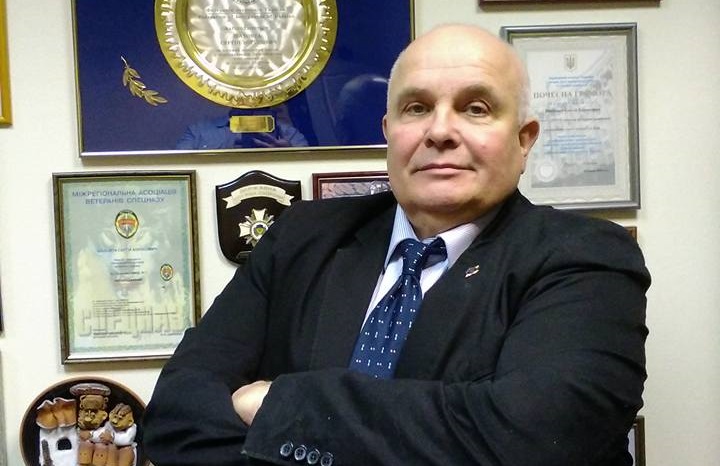 Serhii Shabovta, a security expert, noted:
"What has the current war shown? She showed that the institutional solutions created by the West have turned out to be ineffective in the current conditions. Incompetent in the sense that they did not create tools - economic, political - that could oppose such an aggressor as Russia. The trend of our conversation suggests that in the current conditions, new alternative security models will be sought in the mentioned regions. Dissatisfaction with NATO is not new either. We can recall how French President E. Macron, in conversations with the former Chancellor of Germany A. Merkel, raised the issue of creating a certain alternative to NATO, because they understood that NATO would be an instrument of American influence, and the protection of the national interests of individual countries would be secondary. Therefore, our discussion about the system of collective security is extremely relevant.
On the other hand, we see a trend that determines the position of Turkey - to remain a leading player in the region, including, in military terms, to strengthen its position. In a certain sense, it is also beneficial for the USA, since Turkey is a member of NATO. It is necessary to pay attention to such a dualistic position of Turkey - on the one hand, it has its own interests, on the other hand, its authority is reinforced by the authority of a NATO member state.
It should be noted separately that according to the Montreux Convention, Turkey controls the Bosphorus and Dardanelles straits and this factor determines security in the Black Sea, which is important for Ukraine now».
Regarding foreign weapons in Ukraine, S. Shabovta noted: «The conditions under which we received Western weapons, the scope of their use, are quite strict. And, even if after the war we have a surplus of one or another weapon, its use and operation will be strictly regulated. Obviously, you have heard on the sidelines of NATO that an armed and strong Ukraine, which has learned to fight, is potentially not safe for Europe itself. Therefore, we need to learn to be in this balance - with NATO, but also based on possible allied relations with the countries of the Turks world».