


- Articles
- Hits: 746
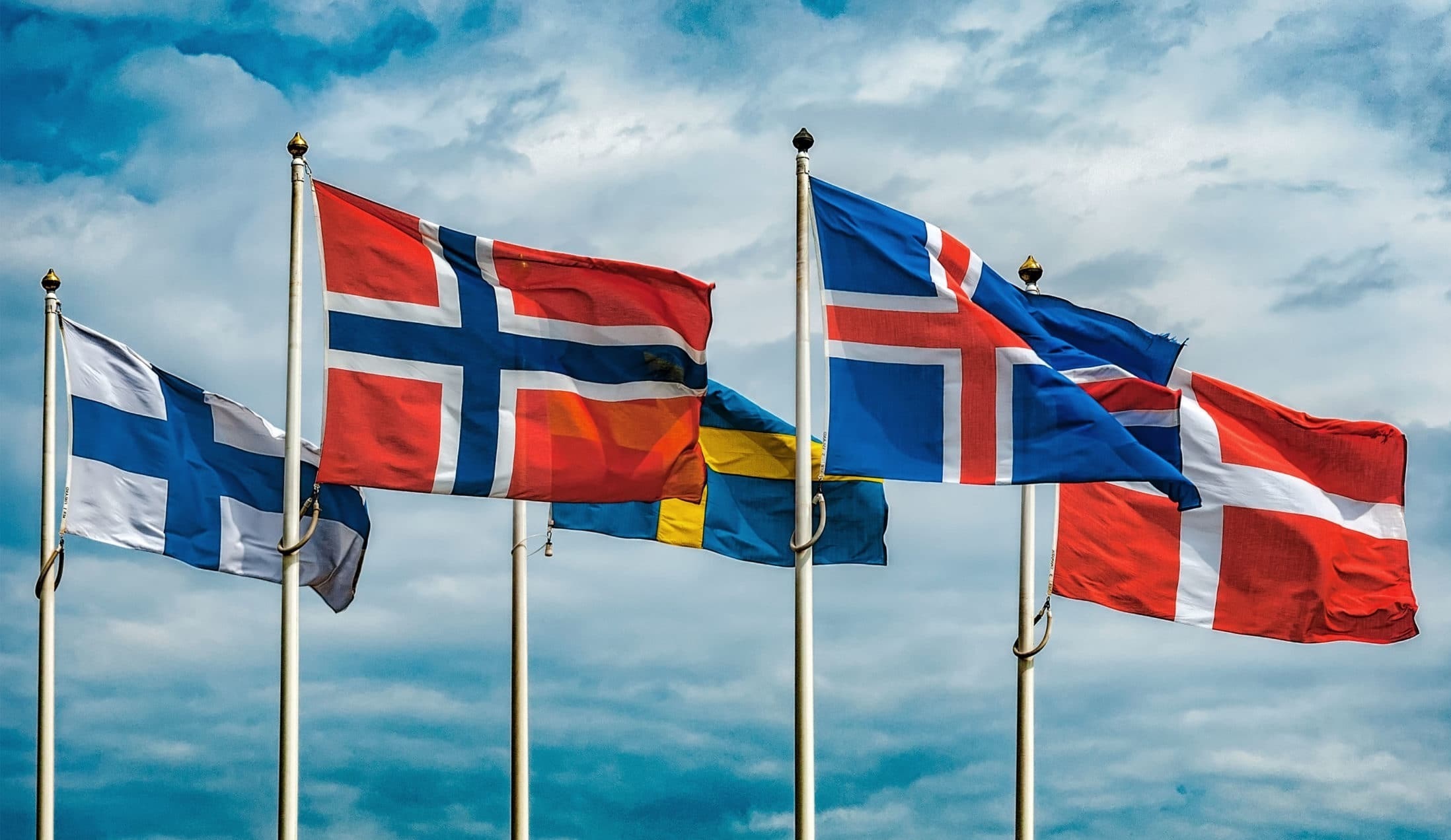
One of the defining directions of the geopolitical positioning of the future Commonwealth of Central and Eastern European Nations is the development of a strategic partnership with the Scandinavian countries. The vital necessity of such a union is determined by a number of circumstances.
Eastern and Northern Europe have long been linked by close trade-economic and military-political ties. In pre-Christian times, it was the natives of the Scandinavian Peninsula (first the Goths, then the Viking-Varyangs) who largely contributed to the inclusion of the peoples of the Rus Plain in the European history. In particular, thanks to the Scandinavians, the ancient route from the Baltic Sea to the Black Sea gained world significance as the «Route from the Varangians to the Greeks». In essence, the Eastern European Mediterranean historically represents an organic eastern projection (Scandinavia-Black Sea) of the «vertical», north-south, geographic dynamics fundamental to Europe.
We can also mention the long reign (1587-1668) of the Swedish Vasa dynasty in the Polish-Lithuanian Commonwealth, and the Protestant-Orthodox «axis» of Europe in the 17th century. (Sweden-Ukraine-Transylvania with the temporary participation of Lithuania).
The strategic role of the «north-south» vector becomes even more obvious with the appearance of a new powerful actor on the eastern borders of Europe - the Moscow State. Thus, a natural alliance of Sweden with anti-Moscow forces in Poland and Ukraine is being built. Further south, Turkey (Ottoman Empire), still ruling the Black Sea at that time, gravitates toward this union. The common interest of the participants of this expanded «axis» was the need to contain Moscow in the north and south at the same time, when Moscow's connectivity on the southern, Balkan-Black Sea flank of its expansion reduces pressure on the northern, Baltic-Scandinavian, and vice versa.
Since «there is nothing new in the sub-lunar world», similar incentives operate in our time. The states located on the European-Moscow border are even purely geographically doomed to be the first link in balancing and «absorbing» the onslaught from the east. The countries of Scandinavia and the Mediterranean, and sometimes Turkey, have to bear the brunt of the Eurasian element, which has been personified by Russian imperialism for several centuries in a row, earlier than the rest of Europe.
And since Ukraine is currently at the epicenter of this eternal geopolitical drama, its partnership with the Scandinavian countries is not only a relevant factor in strengthening Ukrainian defense potential in the face of Moscow's threat, but also an important marker of the capacity of the entire Eastern European security architecture in the future.
In particular, basic security agreements (agreements on security cooperation and long-term support) with Kyiv have already been concluded by two Scandinavian countries - Denmark (February 23, 2024) and Finland (April 3, 2024). These documents define the principles and priorities of interstate partnership in the military, political, financial and humanitarian spheres in order to strengthen defense capabilities. Moreover, the security dialogue with Copenhagen soon received further development - at the end of March, the defense departments of the countries signed a joint memorandum on cooperation in the field of procurement and supply of weapons for the Armed Forces of Ukraine.
It is characteristic that all three non-G7 states that currently have security agreements with Ukraine (Denmark, Finland, the Netherlands) focus their foreign policy mainly on London (the informal «Crown Alliance») and are to one degree or another involved in the implementation of the project «Global Britain». In this way, Scandinavia, among other things, forms a kind of geopolitical «bridge» between the countries of the Intermarium and perhaps the main stakeholder of this association from outside the borders of the Intermarium proper - Great Britain.
In 2023, Scandinavian Denmark was one of the largest donors to Ukraine in terms of the percentage of the value of aid provided to its own GDP (0.51%), second only to the Baltic states, Poland and Slovakia. Other Scandinavians also made a significant contribution: Norway (0.47% of GDP), Finland (0.44%), Sweden (0.31%).
Ukraine is also interested in receiving specific types of weapons from the Scandinavian countries. In particular, last year Denmark already handed over all its 155-mm artillery - 19 wheeled Caesar self-propelled guns on an 8x8 chassis. This became a really powerful decision, because the Danes were completely left without these French artillery systems, which were ordered only in 2017. In addition, Copenhagen plans to transfer its F-16 fighter jets to Kyiv this year, and Sweden is considering the possibility of providing modern multi-role fighters of its own production Saab JAS 39 Gripen in addition to them. For its part, the Norwegian government has allowed the direct sale of weapons and defense products from its defense industry to Ukraine since January 1, 2024.
It is important that the Scandinavian countries officially (Finland) or informally do not object to the use of the weapons provided by them on the internationally recognized territory of the Russian Federation if necessary (and not only on the temporarily occupied Ukrainian territories), thus not tying Kyiv's hands in solving military tasks.
Therefore, the policy of the Scandinavian states regarding the strategic interests of the Intermarium space is as favorable and consistent as possible. The interaction between the countries of Northern and Central Eastern Europe will continue to be determined by the mutual geopolitical importance of these regions. For example, the role of the Scandinavian countries (especially Denmark) in blocking Russia in the Baltic and the North Atlantic is similar to the role of Turkey in blocking the Russian Federation in the Black Sea and the Mediterranean. In particular, even in the absence of a direct conflict with Moscow, these states have every opportunity to create significant obstacles for the main source of filling the Russian budget (including the military) - the sea export of energy carriers, primarily oil.