


- Articles
- Hits: 914
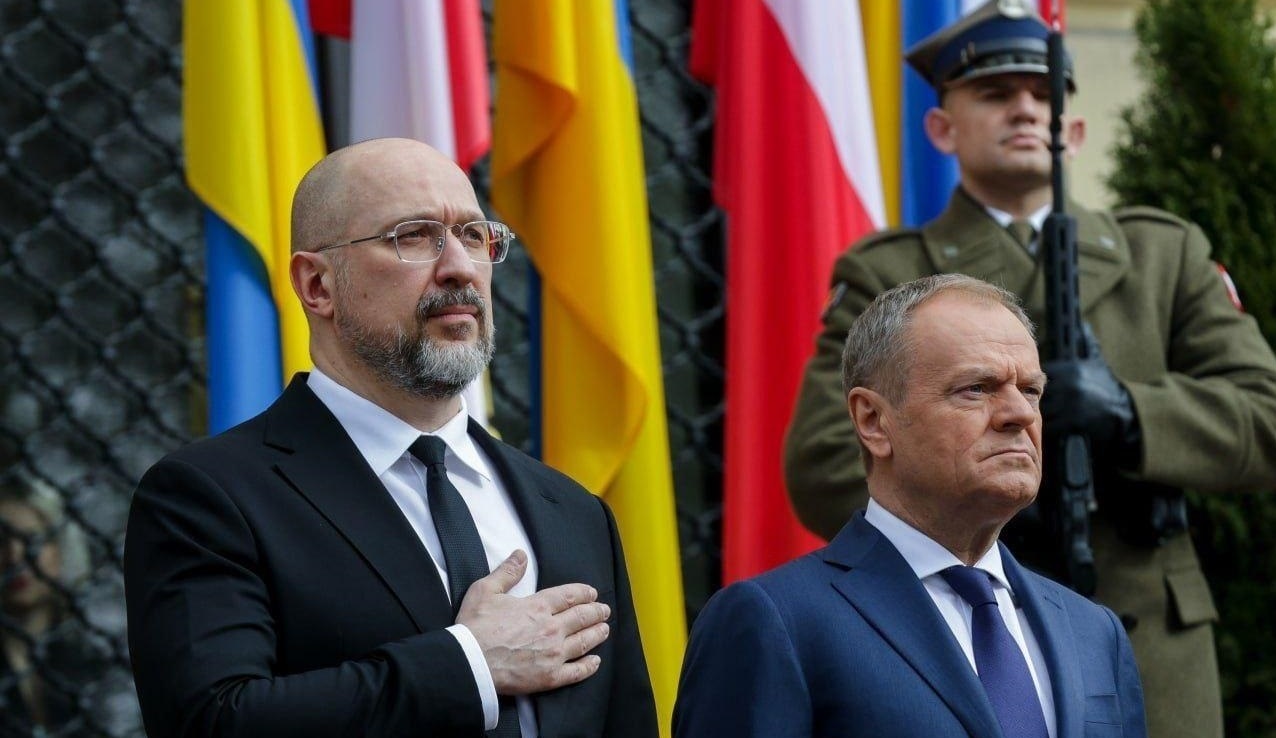
On March 28, a Ukrainian government delegation led by Prime Minister D. Shmyhal visited Warsaw. The visit was aimed at reducing the socio-political tension that exists between the countries in the context of recent trade disputes and with the blockade of the Polish-Ukrainian border by Polish protesters, which Warsaw does not seem to pay due attention to.
Did the visit achieve this goal?
Before the meeting with the Ukrainian delegation, the head of the Polish government, D. Tusk, called to refrain from hoping for a faster settlement of problematic issues, primarily the issue of trade in agricultural products. The head of the office of the Polish Prime Minister Jan Grabiec, commenting on the Ukrainian-Polish intergovernmental meeting, also noted that he does not expect to resolve the differences between the Ukrainian and Polish sides, particularly regarding agrarian issues. In general, these are adequate statements, since the Polish authorities take into account the interests of Polish farmers and Polish business in general. However, the essence of the current conflict is the blocking of Ukrainian grain at the border, which mainly goes through the territory of Poland only in transit. The conflict is exacerbated by the information that at the same time as the Polish-Ukrainian border is blocked, the import of goods from Belarus, including Russian, including agricultural products, is carried out continuously and unhindered.
It should be noted that Poland is on the brink of local elections, which will take place in 2 rounds - April 7 and 21, therefore, obviously, Polish officials are now extremely careful with statements and relevant decisions, realizing that one unsuccessful statement can affect the ratings of political forces. which they represent, especially since the ruling coalition desperately needs to win the elections of presidents (mayors) of key Polish cities.
As a result of the meeting between the two prime ministers, a number of issues of mutual interest in cooperation between the countries were discussed. More specifically, it is worth noting that Poland joined the diplomatic initiative to block the import of Belarusian and Russian agricultural products. Tusk expressed hope that the EU will support the blockade of exports from Russia and Belarus. Separately, the Polish Prime Minister emphasized that he and Shmygal are looking for solutions that will give a sense of security and satisfy the interests of both Polish and Ukrainian manufacturers. Tusk emphasized that the solutions sought will not necessarily suit everyone, but they must take into account the main wishes of Ukrainian and Polish farmers. The delegations of the countries agreed to sign an agreement on joint control of checkpoints, however, when it will be implemented is currently unknown.
According to media reports, there were allegedly high chances of reaching a compromise on the issue of transit of Ukrainian agricultural products. The Ukrainian side proposed a voluntary restriction of transit through Poland by Ukrainian companies this year, provided that transit for products under already signed contracts is maintained. However, according to the participants of the negotiations, this compromise was blocked by the Deputy Minister of Agriculture of Poland, M. Kolodziejczak. The Ukrainian delegation reports that Kolodzejchak made strange statements that can be interpreted as anti-Ukrainian and generally behaved inappropriately. Representatives of Polish associations, present at the negotiations of the government delegations of Ukraine and Poland on trade and transit, confirm his testimony about strange behavior.
Since M. Kolodzejczak is an official, his words and behavior require explanations from the Polish side because it can be interpreted as a démarche on the part of Polish partners and an unfriendly policy towards Ukraine. In general, the inability or unwillingness of the Polish authorities to resolve the crisis on the Polish-Ukrainian border, the actual connivance of the aggressive and illegal actions of the Polish protesters, may indicate the growing crisis between the two countries and the frankly unfriendly steps of Warsaw. This trend can be observed for a few more weeks, but at this moment, disappointing conclusions are drawn: once a key and strategic partner of Ukraine, one of the pillars of the Intermarium (Midsea) concept, Poland is deliberately weakening Ukraine and, in fact, playing along with Russia.
Although a number of statements were made during the meeting between Tusk and Shmygal regarding comprehensive partnership and deepening of cooperation, the general background of the Ukrainian-Polish dialogue is currently negative, and the agreements reached are about blocking the import of Belarusian and Russian products, agreements on joint control of checkpoints, trade liberalization , further military assistance - are rather declarative without concrete content.
A few weeks after the end of the second round of local elections in Poland (April 21) will be indicative, when Polish politicians will return to their usual work routine. Until then, the authorities will obviously postpone the resolution of pressing issues. There is a possibility that the Polish authorities, after the local ones, will take appropriate steps to meet Ukraine, but, let's emphasize once again, currently the relations between Kyiv and Warsaw are almost the worst in recent history.
Valentyn Haidai - director of the Intermarium Institute