


- Articles
- Hits: 567
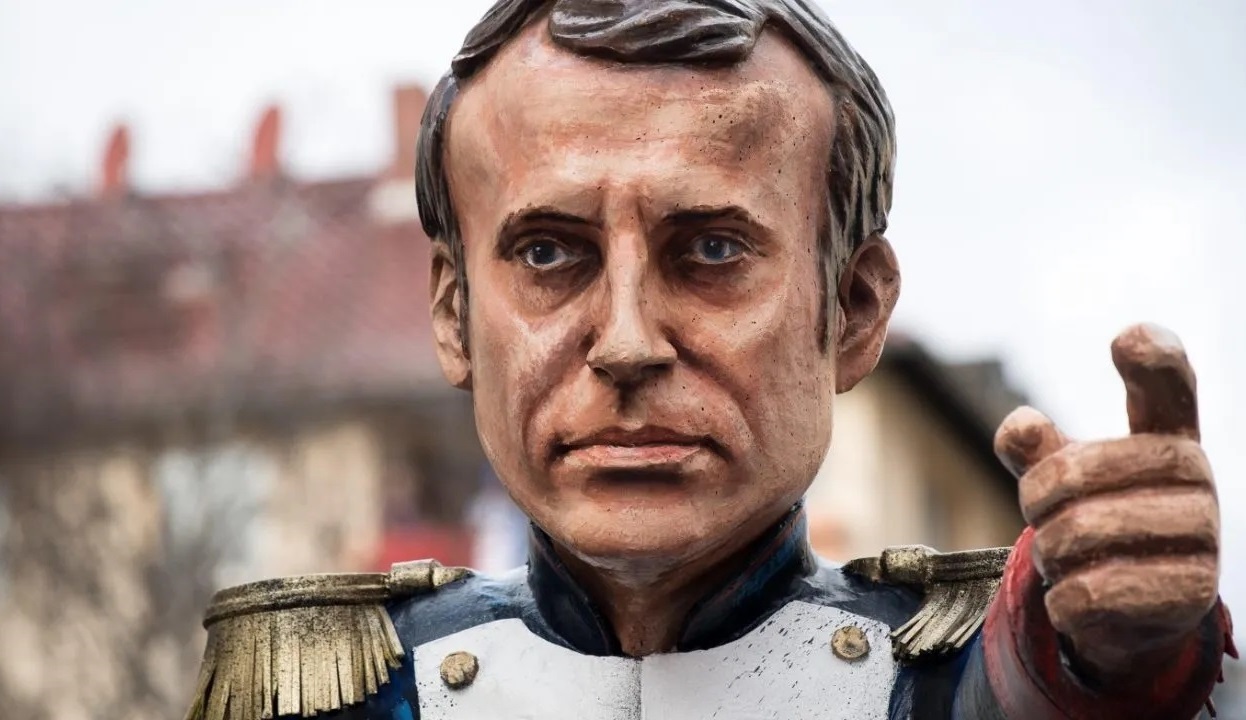
On May 7, 2017, E. Macron was elected President of France. His first presidential term was spent trying to maintain France's position in Africa and his ambitions to become a peacemaker between Ukraine and Russia. The forces of the Foreign Legion were not enough to maintain influence in the French-speaking countries of West Africa. Efforts to implement the «Norman format» of the Donbas settlement reached its peak in December 2019, when President Macron, German Chancellor Merkel, Ukrainian President Zelensky, and Russian President Putin met in Paris. An attempt to revise the Minsk agreements of 2015 was defeated. Macron's subsequent «telephone diplomacy» with Putin was also unsuccessful. The Kremlin decided to use the mercenaries of the private military company «Wagner» to oust France from Mali, Burkina Faso, Niger, and Chad. The loss of influence in Niger, which was the main supplier of uranium for French nuclear plants, was especially painful. Despite this, France was very cautious in interpreting the facts of Putin's war against Ukraine after its escalation on February 24, 2022. This was due to Macron's desire to be elected to a second (last until 2027) presidential term in May 2022. After that, France resumed its foreign policy activity, in particular, in the Caucasus and Eastern Europe.
Until February 2024, France was not even the European leader in the supply of weapons and financial aid to Ukraine. According to the criterion of the percentage of such aid from the gross national product, France was inferior not only to Germany, but also to Poland and the Baltic and Scandinavian countries.
Macron is trying to use his second presidential term to go down in history as the new de Gaulle, who strengthened the greatness of France as a major European power. Choosing this course was rather slow. Even after the British referendum on June 23, 2016 to leave the European Union, France was in no rush to officially assume the role of leader of the European Union. London gradually tried to compensate for its influence in Europe by forming special relations with the Scandinavian monarchies, Poland and the Baltic states. Paris was even slower to rethink its role in Europe. An attempt by Macron's predecessor, President Nicolas Sarkozy, in 2007 to formalize French influence in the «Mediterranean Union» was defeated by the revolutionary upheavals of 2011 known as the Arab Spring.
Instead, after Macron's re-election for a second presidential term, the contradictions between France and Turkey intensified, especially after the discovery of the large Leviophane gas field on the shelf of Turkish Northern Cyprus and Israel. After that, France's cooperation with Greece, Turkey's rival, became closer. The contradictions between Ankara and Paris spread to the Azerbaijani-Armenian conflict. Yerevan has chosen Paris as its key military-political ally in Europe. These considerations actualized French geostrategy not only in the Mediterranean Sea, but also in the Black Sea and the Caspian Sea. This is how a kind of French «Three Seas» was formed.
The fulcrum of French interests on the Black Sea is Romania, where Europe's largest NATO base is being built in the port of Constanta. France has become the guarantor of Article 5 of the Washington Treaty for Romania, which is especially important in light of Russia's attempts to destabilize the situation in Moldova and the separatist Moldovan region of Transnistria.
France's attempts to strengthen the military potential of Armenia are a project to neutralize Turkey's intentions to form the Zangezur Corridor in order to exit from Nakhichevan to the Caspian Sea. This corridor is key for the Turkish project «Great Turan». However, this prospect of strengthening Turkey does not correspond to actual French interests. Therefore, French diplomacy contributes to the formation of a support network for Armenia from Greece to India. This rate is used for negotiations between Armenia and Azerbaijan regarding the demarcation of the state border after Yerevan's defeat in the Karabakh war. At the same time, France is in no hurry to stimulate Armenia's official exit from the Collective Security Treaty Organization. In the context of the 2020 Azerbaijani-Armenian war, Russia took a neutral position, which motivated the Armenian elites to accuse the Kremlin of treason and non-fulfillment of the collective security agreement. It can be assumed that, under the conditions of the war against Ukraine, it would be beneficial for Russia for Armenia to voluntarily withdraw from the Collective Security Treaty Organization. Despite the presence of a Russian military base in Gyumri, Armenia, the key to Russia's presence in the Caucasus is not Armenia, but Georgia. In fact, the annexed Georgian regions of South Ossetia and Abkhazia are more important from the point of view of the Russian presence in the Black Sea-Caspian region than Armenia.
In its «Three Seas», France has different interests with Great Britain, which shows an interest in strengthening Turkey's position in both the Mediterranean and the Black Sea-Caspian region. London views Ankara as a factor in destabilizing the process of strengthening the European Union and preparing for the expansion of the EU to the Western Balkans and Moldova and Ukraine. At least this is the case under the British Conservatives, who, most likely, will lose to Labor in the next parliamentary elections in 2004. It is interesting that Labor advocates holding a new referendum on the possibility of Britain returning to the European Union. But for now it can be considered a hypothetical possibility.
For now, France is trying on the role of leader of the European Union, especially as Germany finds itself more dependent on Paris. After all, after the closure of the German nuclear power plants, France became the largest supplier of electricity for the German economy. From this point of view, France has interests in the Ukrainian uranium deposits at Zhovty Vody and in Ukrainian nuclear energy in general. In this context, it is possible to consider President Macron's statements regarding the possible participation of the French military on the side of Ukraine in the Russian-Ukrainian war.
The mentioned case fits into the context of Russia's information war against the West. Russia's regular threats to the West regarding the use of nuclear weapons should have received an adequate abstract response. France is absolutely not satisfied with Russia's plans to cut off Ukraine from the Black Sea and annex not only Donbas, but also the Ukrainian Black Sea region. Such a hypothetical prospect makes a direct war of Russia against NATO even closer. Under the conditions when the chaos of the presidential election campaign in the USA and the growing probability of the election of Donald Trump as the US president, question the readiness of Washington to fulfill its obligations under Article 5 of the Washington Treaty regarding the protection of, for example, the Estonian Narva or the Suval corridor at the junction of the borders of Belarus, Lithuania, Poland and the Kaliningrad Russian enclave, the importance of France's willingness to be the military leader of the European Union is growing. For this, France has nuclear weapons, a developed military-industrial complex and a professional army. Another thing is that the escalation of war rhetoric seems out of time, when the election campaign for the European Parliament is unfolding. According to the results of the elections on June 9, 2024, there is a probability of strengthening the influence of right-wing populists in the European Parliament. It is significant that their French representative, Marine Le Pen, who has already lost elections to Macron twice, supported his initiative to strengthen Ukraine's defense potential. The preservation of the European Union as a global liberal project and the potential of French leadership depend on this.
Andrii Martynov – expert of the Intermarium Institute