


- Articles
- Hits: 529
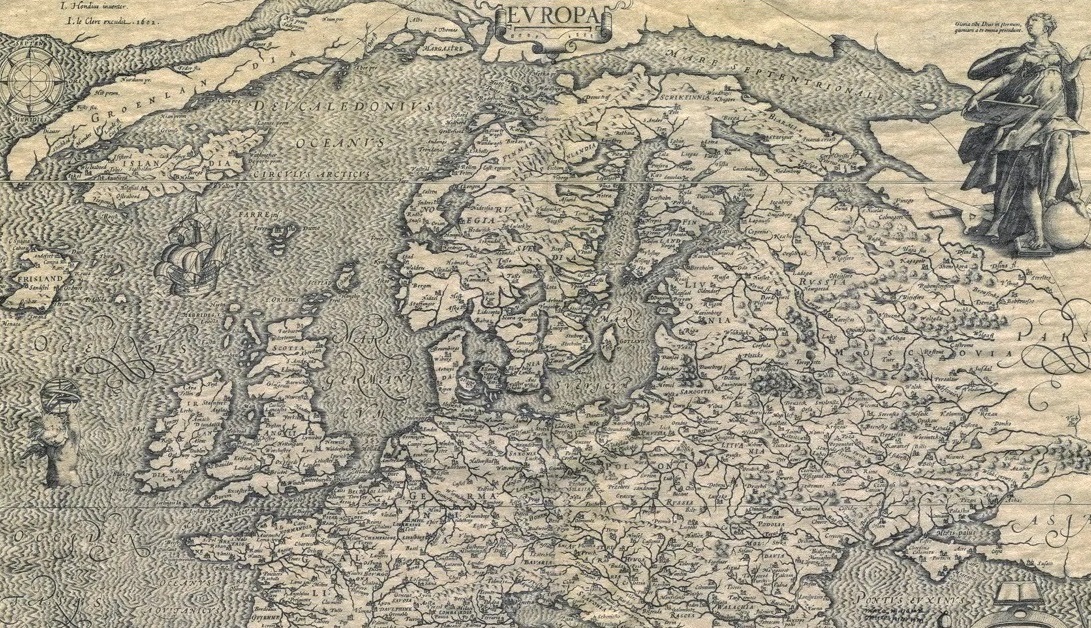
Each state tries to implement its own security issues through the system of international law, multilateral and bilateral interstate treaties, participation in military-political or simply political alliances (blocs), as well as through informal alliances and dialogue platforms with states that share common security interests.
Pre-war geopolitical projects, illusions and mistakes of the Ukrainian political elite
Russia's full-scale invasion has eloquently demonstrated all the shortcomings of the security architecture that Ukraine has created for itself over the 30 years of its independence.
Firstly, due to international political realities and the Ukrainian government's delay in reforms, Ukraine was unable to become a NATO member. And participation in this military and political alliance could have been a real guarantee against Moscow's territorial encroachments.
Secondly, international law did not stop Putin from launching an armed aggression against Ukraine and from manipulating international law to justify this aggression.
Thirdly, the UN has been paralysed by the fact that Russia is a permanent member of the Security Council and has a veto. And China in the UN systematically does not support resolutions that it considers favourable to the US and the West as a whole, and considers Ukraine itself an ally of America.
Fourthly, as a result of Russia's attack on Ukraine, the Helsinki Final Act has lost its meaning. And the OSCE, established in accordance with it, has found itself in a state of crisis comparable to a human coma. This organisation was supposed to be a platform for dialogue to prevent a major war in Europe, but it has turned into a meeting where everyone accuses each other of violating the provisions of the Helsinki Final Act, the treaty on conventional arms in Europe. It is possible that after Russia's defeat in the war against Ukraine, the provisions of these documents will be updated and the normal functioning of the renewed OSCE will be restored. But it is clear that this cannot happen without the post-war Russian Federation returning to compliance with these documents and participation in this formal dialogue platform.
Fifth, various informal interstate gatherings and clubs that were created to build security alliances did not (and could not) help Ukraine defend itself against a full-scale armed attack by Russia. For example, GUUAM (later GUAM) proved to be ineffective because it promoted the unification of states that were at that time significantly separated by geography and had no actual common military-political or simply political interests. The implementation of the Warsaw-originated concepts of the Intermarium (Baltic-Black Sea Union) and the Three Seas was limited to declarative political measures, as well as the creation of the Ukrainian-Polish-Lithuanian Brigade to participate in some missions, but not in a war on the side of Ukraine in opposition to the Russian armed invasion. This was obvious, because Poland, Lithuania and other NATO member states are bound by strict defence commitments enshrined in their ratification, and therefore these states cannot fight separate wars in Eastern Europe on their own.
The intellectual and practical activities of the Ukrainian political elite in the period 1991-2021 can be generally assessed as dominated by the «historical legacy» in approaches to determining geopolitical vectors. This «inheritance» manifested itself in two opposite directions:
- the concept of priority preservation and development of close economic ties with Russia and other CIS states (a consequence of dependence on natural resources and the remnants of Soviet production cooperation);
- the concept of integration into the Western world, which was driven by the political slogan «Away from Moscow!».
The so-called «Third Way» was represented by two concepts. First, it was mainly about political neutrality with a priority on developing economic cooperation with the CIS, the West, the East, and the South. This approach was an attempt to balance Russia's influence on Ukraine by strengthening cooperation with China. Second, to protect against pressure from Moscow, there was an attempt to create an alliance of post-Soviet states known as GUAM. The idea of such an alliance looked like a genuine manifestation of Ukraine's international political subjectivity, but, as noted earlier, the project proved unviable due to geography and the lack of common geopolitical interests among the member states.
The outbreak of Russian aggression in 2014 led to a final and unequivocal realisation by the Ukrainian political elite and the vast majority of Ukrainian society that Ukraine's integration into the EU and NATO was the only alternative direction for its foreign policy. It was not only a value choice in favour of the West, but also a security choice: an attempt to protect itself from territorial encroachment, armed aggression and pressure from Moscow. In this way, the Ukrainian elite simply decided to «hide» from Russia in NATO and the EU, but did not «give birth» to any truly subjective approaches. Therefore, in search of protection, it played with security concepts proposed by other intellectual elites: Intermarium (Intermarium, Baltic-Black Sea Union), Trimarium (Three Seas), and the Visegrad Four.
The idea of the so-called «Lublin Triangle», although proposed by Kyiv, is a lazy copy of the Polish version of the Intermarium. History and the events of 2022-2023 have clearly proved that Poland, Lithuania, and other Baltic states were and remain important allies of Ukraine during the full-scale war of aggression unleashed by Russia. They will remain so after the war.
However, the time has come for the experience of security cooperation in the Baltic-Black Sea area to be rethought, supplemented by new geopolitical realities, through the prism of new meanings and new subjectivity of Ukraine, as they exist now and for the post-war period.
Historical and contemporary space of Kyiv's political and economic interests
Any organisation has an internal and external environment. A state is a military, political and economic organisation. A modern state is a nation-state, which is a way of life of a certain people, a military, political, economic and spiritual organisation of this people.
Each state has a unique external environment, determined by its unique geographical features, in which its political, economic and security interests are realised.
For Poland, as a state organisation, the space of national interests has naturally consisted of the world around it - Central Europe, the Balkans, and Eastern Europe. The concept of the Intermarium was just one of the geographical directions for the realisation of such an unquestionable interest as the joint containment of Moscow's aggressive imperialism with the states of the Baltic-Black Sea region.
For Kyiv, the Baltic-Black Sea space is not something external, but the location of the Old Rus' State, Bohdan Khmelnytsky's state, the Ukrainian People's Republic and modern Ukraine. Kyiv's statehood was and remains the main element, the heart of this space.
Geographically, Kyiv's area of interest has always been much wider. In the times of Rus', Bohdan Khmelnytsky's state, and the Ukrainian People's Republic, it included the Baltic States, Central Europe, the Balkans, the Black Sea region, and the space up to the Caspian Sea and the Volga. For modern Ukraine, this space has expanded in all directions - western, southern, northern and eastern. Several factors contributed to this.
Firstly, the development of communication means (communications, transport) and globalisation.
Secondly, qualitative and tangible progress in the transformation of the former Soviet republics into full-fledged nation states that have formulated their own national interests and foreign policy objectives. Decolonisation, as a process of overcoming the imperial worldview imposed by Moscow, has passed the point of no return in all post-Soviet states. It seems that this has also happened in Belarus, although the authorities there still actively support a pro-Russian discourse with elements of Soviet ideology.
Thirdly, Putin's full-scale attack on Ukraine on 24 February 2022 showed all post-Soviet states that the Russian political elite is not only sick with the ideas of imperial revanchism, but is also ready to implement such ideas through a full-scale war against them. The war has shown that the statements of Russian figures about «donated territories» are not just loud words for television shows, but a real threat to all states to which Moscow has claims. The war against Ukraine has become a clear demonstration of the Kremlin's superiority towards all the peoples of the former Soviet Union. As a result, the attitudes of national elites in post-Soviet states towards Russia and its elite have changed significantly. For example, Kazakhstan significantly increased its «distance» and began to view Muscovy as a real threat to its territorial integrity. The war has made the imperial arrogance of the Russian ruling elite towards the peoples of Armenia, Uzbekistan, Kyrgyzstan, Azerbaijan, and Tajikistan look unambiguously aggressive.
Thus, Russia's full-scale war against Ukraine has accelerated the evolution of post-Soviet nation-states towards the realisation of the threat posed by Russian imperial revanchism and distancing themselves from Moscow. The states in the South Caucasus and Central Asia have begun to clearly see Russia as a source of threats to their own national security. This vision coincides with that of Ukraine, and opens up new political opportunities for Kyiv to create various interstate formats aimed at jointly deterring and preventing threats from Russia - real and potential.
Geopolitical Challenges, Opportunities and Tasks for Kyiv in the Postwar Period
The events of 22 and 24 February 2022 led to a dramatic change in the geopolitical situation in the world and in the area around Ukraine.
In fact, a full-scale war has become a factor that has accelerated the process of qualitative transformation of the geopolitical landscape in Eastern Europe and central Eurasia in general. Conventionally, this vast region can be referred to as «Central Eurasia», as it covers the area from the Carpathians in the west to the Tien Shan in the east, from the Baltic Sea and the North Ocean in the north to the Black and Caspian Seas, Turkey and the South Caucasus in the south.
The West has clearly and unequivocally reaffirmed its allied support for Ukraine in defending its territorial integrity from Moscow's encroachments. And in addition to traditional allies in the Baltic-Black Sea region, Kyiv is gaining potential security partners in the southern and eastern directions.
The role of Ukraine itself in the security contour of the Baltic-Black Sea area and in the power architecture of Central Eurasia as a whole has changed: the Ukrainian army is and will remain the largest combat-ready army in the space from the Atlantic to the Tien Shan.
The creation of a defence hub in Ukraine will turn it into the main tool to deter Moscow from new aggressive manifestations of imperialism in the post-war period. This means that the Ukrainian state will become one of the most important components (and possibly the core) of the international system that will be created to maintain peace and stability in Central Eurasia in the post-war period.
Ukraine's central role in confronting Russian imperialism is not some hypothetical future, but an internationally recognised reality. The need for a Kyiv-centric system of organising the security space is not only a demand of the time for the Ukrainian people. Such an approach is fully in the interests of the West, complementing the efforts of the US, EU, UK and other states to prevent new wars in Central Eurasia. Kyiv finally has the opportunity and the duty to pursue a more active, more subjective foreign policy for the sake of peace and its own security.
What does the concept of the «Great Intermarium» as a new space of Ukraine's security interests envisage for the present and post-war period?
1) After Russia's defeat in the war, Ukraine's biggest external security threats will be two problems (two risks) related to the Russian space. Therefore, Kyiv will need to actively address two tasks:
- to facilitate such a peaceful transformation of Russia in the post-war period that would ensure the impossibility of the resumption of Russian imperialism and a new Russian attack on Ukraine in the future;
- to minimise the negative impact on Ukraine from hypothetical armed conflicts on the territory of the present-day Russian Federation.
2) The main goal of the Kyiv-centric «Great Intermarium» is to create an informal and multi-level permanent dialogue between different states of the region to deter Russia from relapsing into imperialism, from revisionist wars and other threats that will arise in the Russian space for Ukraine and other states bordering the Russian Federation.
In other words, it is an informal pact for the sake of stability and security in Central Eurasia.
3) Ukraine's main allies in the implementation of these goals and objectives are and will continue to be the United States, the EU, the United Kingdom, Germany, Poland, France, Denmark, Sweden, the Netherlands, as well as Norway and Finland.
However, the basis for the «Great Intermarium» will naturally be the states that border Russia and are part of the classical Intermarium (the Baltic-Black Sea area): Poland, Lithuania, Latvia, Estonia, Romania, and Moldova. They are Ukraine's natural allies in deterring Russian imperialism in Eastern Europe. It would be desirable to join Belarus after the emergence of a democratic national government there.
At the same time, the format of the «Great Intermarium» envisages Kyiv's involvement in solving security problems of new natural allies in deterring Russia, such as Kazakhstan, Azerbaijan, Georgia, and Armenia. Turkey and Uzbekistan can also play an important role in deterring threats from post-war Russia.
Ukraine is also interested in completely eradicating Moscow's destructive influence in the Balkans.
4) The main role in deterring post-war Russia will be played by the Christian states of the classical Intermarium. Christian values have always been one of the foundations of nationally conservative political forces and movements. The cooperation of Christian organisations and national conservative parties in the classic Intermarium states can have positive consequences for improving the demographic situation in these states. Also, Christian organisations can make a significant contribution to the involvement of Christian Armenia in the anti-Russian coalition. They can also strengthen anti-Russian sentiment in Georgia.
A dialogue between Christian organisations in European countries and some Christian organisations in Russia could be important for the transformation of post-war Russia. At present, such a dialogue seems impossible with the Moscow Patriarchate, which is the state church and spiritual henchman of the Putin regime. However, in the post-war period, such a dialogue may well become possible with certain parts of the Russian Orthodox Church and other Christian organisations in Russia. Dialogue for the sake of gradually changing the ROC from a messianic-imperial structure to an organisation that will deal exclusively with the spiritual needs of Russians.
A dialogue between Christian organisations and national-conservative parties in the classic Intermarium states and Muslim organisations and national-conservative forces in Kazakhstan could be equally important.
It is clear that the «Great Intermarium» is the «Ukrainian Intermarium» in its meaning, unlike the classic Intermarium formats.
The «Great Intermarium» is the space between the five seas: Black (and Mediterranean), Baltic, Adriatic, Caspian, and White.
To some extent, we can speak of this space as the «Great Intermountain»: Balkans and Carpathians in the west, Caucasus and Tianshan in the east.
The «Great Intermarium» is a partnership (platform) for the security of states, prevention of wars, as well as for development and international relations.
The formats of interaction can be varied:
- bilateral or multilateral dialogue (at the governmental and non-governmental levels);
- formal and informal agreements.
In general, we are talking about a network structure aimed at preventing new wars and destabilisation that could pose a threat to Ukraine's national security.
It remains to be seen whether post-war Russia will become a neighbour with whom it is possible to conduct business and security dialogue without fear of a new sneak attack.
Volodymyr Volia - strategic research coordinator of the Intermarium Institute