


- Articles
- Hits: 808
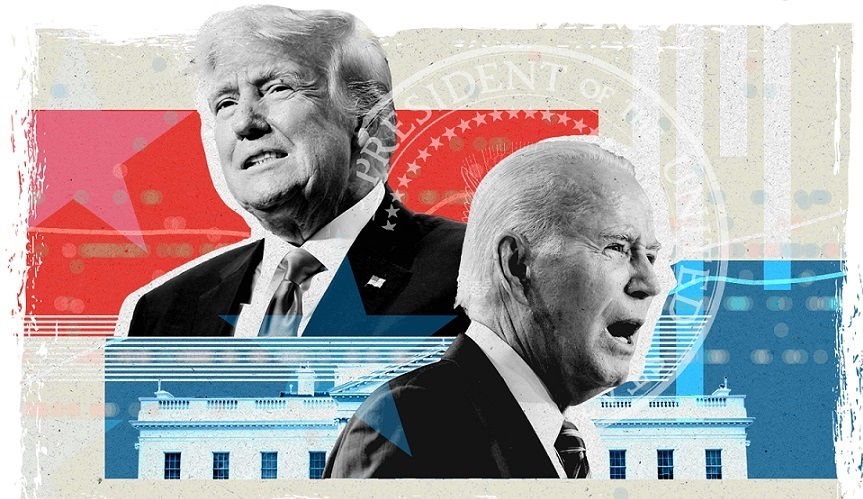
After the influence of the United States became global, there was a humorous idea that the president of the United States should be elected by the whole world. Humor reflects life, but is often far from reality. However, in the domestic political discourse of many countries of the world, sympathies and antipathies have formed towards two already well-known candidates for the November 5, 2024 elections.
The Scandinavian countries are fairly equidistant from both candidates. Sweden and Finland quickly became NATO members thanks to the policy of J. Biden, who actively reacted to Russian aggression against Ukraine. At the same time, the Baltic countries are wary of D. Trump's statements regarding their unwillingness to defend Estonia's Narva or the Suvalkin corridor from potential Putin aggression. Iceland and Denmark remember Trump's «business» offer to buy Greenland to strengthen the US position in the Arctic.
More acute are the contradictions regarding the sympathies for Biden or Trump in the countries of the Visegrad Four. In Poland, the competition between the currently ruling «Civic Platform» of D. Tusk and the «Law and Justice» party of J. Kaczyński is an indirect reflection of heated discussions during the presidential election campaign in the USA. In the Czech Republic, we are also witnessing a sharp internal political confrontation between liberals and right-wing conservatives in the context of sympathy or antipathy for Biden or Trump. In Slovakia, R. Fico's ruling coalition is much closer to Trump than to Biden. On the other hand, the Hungarian Prime Minister V. Orbán openly sympathizes with Trump and does everything possible for him to win.
In the countries of the Western Balkans, we observe different ideas about the desired winner of the presidential elections in the USA. Slovenia is closer to the liberal position of the American Democrats, while Croatia is internally politically divided according to the criterion of sympathy for Biden and Trump according to the marker of belonging to liberals or national conservatives. Serbia is the flag bearer of anti-American sentiment in the Balkans. Therefore, the attitude towards Biden and Trump for Belgrade is characterized by an anecdote about Stalin, who, when asked who is worse, the left leaning or the right, allegedly answered both worse. Vucic has an example of Trump's policy in the Balkans in 2017-2020, when the US sought Belgrade's recognition of Kosovo. A reflection of Serbia's position is the position of Bosnian Serbs, who are ready to be wary of both candidates in the US presidential elections.
Bulgaria and Romania received preferences from NATO membership during Trump's presidency. The USA started building a NATO base in Constanta. Under pressure from Trump, Bulgaria and Greece were forced to agree to change the name of the Republic of North Macedonia in order for this Balkan country to join NATO.
Instead, Greece has a difficult experience of interaction with both the administration (2017-2020) and the administration of Biden (2021-2024), when the US was interested in keeping Trump's Turkey from a direct armed conflict with Greece and opened wide opportunities for the conduct of the president's Mediterranean and Middle East policies R. Erdogan.
New Eastern Europe (Belarus, Moldova, Ukraine) has its own experience of interaction with both American administrations. The Trump administration was the promoter of sanctions against A. Lukashenko for the suppression of popular protests against the falsification of the presidential elections in August 2020. Trump also radically revised Obama's policy of non-interference in the Russian hybrid war against Ukraine. It was the Trump administration that started supplying weapons to Ukraine, of course, late and not in the amount that was needed, but the fact itself is indisputable. The Trump administration never got around to solving the Transnistria problem. But he did not agree to Putin's price for recognizing Russia's sphere of influence in Eastern Europe. The J. Biden administration took exactly the same position in 2020-2024.
This is also the Caucasus. Azerbaijan's victory (November 2020) over Armenia and the liberation of Karabakh fall on Trump's presidency. But Trump came to terms with Russian influence in Georgia through the political structures of oligarch B. Ivanishvili. The Biden administration was unable to persuade Azerbaijan and Armenia to demarcate the border and decide the fate of the Zangezur Corridor from Nakhichevan to the Caspian Sea. Both Trump and Biden administrations supported the Baltic-Black Sea axis project. In terms of balancing the influence of Russia and Iran, both Washington administrations have influenced the strengthening of American positions in Central Asia and the Caspian.
After the escalation of Russian aggression against Ukraine after February 24, 2022, the Biden administration achieved the implementation of Trump's idea to restore the defense of NATO member countries by at least two percent of the gross domestic product. At the same time, the country is the objective parameters of relations between the European Union and the United States. They suffer from cheap Chinese goods, freely restore the defense industry before the challenge of Russian aggression against Ukraine. But new trade wars between the EU and the USA can be expected from the hypothetical new administration of D. Trump. The outcome of the elections to the European Parliament can have a noticeable impact on the course of the election campaign in the USA. Trump has reason to hope for a strengthening of the positions of European skeptics and the far right in the new composition of the European Parliament.
Andrii Martynov – expert of the Intermarium Institute